The soap suds and the blood met and swirled awkwardly around each other like teens at a high school dance before slipping into the darkness of the drain.
And, like a high school dance, there were elements that blended and that would not. Like the clean-up committee, they stayed on the sidelines waiting for the crowd to thin out and the water to stop before they could leave.
Soap washing off mixing with blood dripping out.
I was having an out-of-body experience. Watching the blood and soap dance and mix, not dance and keep to its own, was hypnotic.
It didn't hurt.
At least I don't think it did.
It could have been the whiskey, it could have been the cocktail of prescription meds I scooped up from the cabinet over the vanity starting to kick in.
It didn't hurt.
In fact, it wasn't until I got in the shower, that I found out I was bleeding.
I shouldn't have been surprised.
They'd started with the drugs--everybody wants clean hands.
I don't know if they were afraid to put their hands on me because of my age, or they just had a thing for needles, but when they finally got ready to work on me, they decided to go straight to the point.
I don't know what they gave me, but I could feel the surge of warmth pour through my body like when they give you a hot towel at the barber, or a warm blanket at the hospital.
That very pleasant feeling was followed almost immediately by the overwhelming urge to pee.
This was their opening strategy, they were going to force me to talk so I could avoid the embarrassment of pissing my pants.
I smiled. I actually smiled at that point and I know it made them mad.
They were trying to be all serious and scary and they were counting on embarrassment.
Comes a point, you live long enough, that stops being a thing: embarrassment loses its hold over you.
It's different for everyone, but you know you've reached that point when you spend a little too much time talking to people young enough to be your grandchild and the hair restoration ads stop being funny.
I was an early victim of embarrassment and it took over my life for a long time. I was embarrassed by everything. And not that awkward embarrassment that comes from being a teenager; I was consumed by the thought that everyone--whether they knew me or not--was consumed by thinking about and judging me. It wasn't until I could walk into that gym and be in command of my own body, not until I knew for certain that it would do what I was asking that I could begin to raise my head and look people in the eye.
Looking people in the eye was a big thing in my house.
My dad said it was a privilege and not a right. You look a man in the eye when you are his equal and not before. You look a man in the eye when you take his life. It's transactional, an exchange: you trade your amateur status for a seat at the big table.
I understand that now, but only because I wasted a lot of time waiting for an invitation. I kept expecting that I would be deemed worthy. All I had to do was collect enough merit badges and I would graduate to the big table. I had buckets of merit and there was never a sear for me: you circle the chairs listening to the music, but when it stops there is never an open seat.
That's what it felt like to be me.
And that was the me that these "professionals" thought they had strapped to that chair: the guy who would roll up his dog rather than piss himself.
I love my dog.
I can always get more pants.
Turns out, my "hosts" had more drugs in their store and they worked through a bunch of them.
They tried several different hypnotics and amphetamines--separately and together--anti-psychotics, pro-psychotics. (Before they got bored and started beating me, I think they were just making shit up the way teenagers experiment with alcohol: a little of this and a little of that.)
It is often surprising to me how and where you learn that benefits of experience. Jim used to say that life is prologue and it took the longest time to figure out what he meant.
At one point, I felt certain that he meant you accumulate skills and experience and like it is some sort of account that you can draw from to confront challenges and identify opportunities. It's only as I have gotten older that I see it as more of a toolbox: you draw on elements and apply them as circumstances demand.
When you're young, the box is small and the tools are inexpensive--they don't hold an edge and they feel rough in your hands. Time goes by, you get better tools, higher quality and, most importantly, you learn how to use them.
During my time at The Farm, we had a whole course on interrogation by drugs. More than anything, this was the course that everyone feared.
You have to remember this was shortly after the war and whispers had been heard about MKUltra. Everyone knew someone who knew someone who had gone into the field and come back "changed." We didn't know what had happened or who was doing it, but we all were certain that there was "brain stuff" going on and we didn't want to end up in the produce section.
Nobody was certain where he came from but they had a guy teaching the interrogation course that they "found" somewhere in Europe right after the War.
He was considered such an important asset that nobody knew anything about him.
When you got to The Farm, the first thing you heard was about this class and the second thing was somebody's version of The Instructor's history with the company. Some said he was an asset and others were equally certain he was a penalty--the "cost" of unfettered access to West Berlin.
"Instructor 37" was a name right out of the Saturday morning serials, but it didn't stick. Everyone called him The Beefeater.
He got that name because his fondness for the gin.
Morning, noon, or night, it didn't matter what was going on, or who it was going on in front of, he was never far away from a glass, some ice and a siphon.
The Beefeater was the heavily-accented boogeyman that you told your deepest and your darkest secrets too, whether you wanted to, or not.
They called it a "course" but this was education not in the Socratic sense, but in the same way that birds teach their young to fly--by kicking them out of the nest. You were not going to be given theory, instead they administered the actual drugs and evaluated your responses. If you managed to keep your shit together, didn't freak out too badly on the way down, then you made it to graduation.
Almost everybody did; most of those that didn't it was because of what they said when they were under--usually stuff that hadn't shown up during the checks.
The more time I spent in the field, the more I came to appreciate the value of that experience. It's not until you've had the needle in your arm and heard the words that you swore would never be said come tumbling out of your mouth that you really understand what interrogation can accomplish and at what price.
Spending time with The Beefeater you understand that nobody really says anything under the needle that they weren't prepared to say anyway. The drugs give you the permission to betray yourself and to betray your country.
And, once you understand that, the drugs have no hold on you: you can always get clean pants.
So then they started beating me and that's when I knew I was able to escape.
He told us exactly what to look for, I mean, EXACTLY and then he did it.
We all smiled and applauded, but, truth is, nobody saw it.
There was nothing to see.
I mean NOTHING.
One minute, the world was one way and, the next, it was a whole different way: the guy was that good.
Fifty years he's making a life with those hands and so you think he's gotta be good, but you also think, after that much time, there's gotta be some slippage, but no. I mean, if he's lost a step or two in that time and we still can't see shit he must have been un-fucking-believable back in the day.
All the time in this business you run across people drunk on their own Kool-Aid. They make a bit of a name doing whatever it is that is their thing and they stop doing the work and start talking. They turn into librarians. Down goes the membership and up goes the shingle.
Funny how so many went into the Invisible Business looking for the spotlight.
I'm watching this guy working the tools of his trade and I'm thinking about the professionals I met along the way. I am trying to think of the ones I knew that made their date with the sheet cake and I am seeing the faces of each of those that did not.
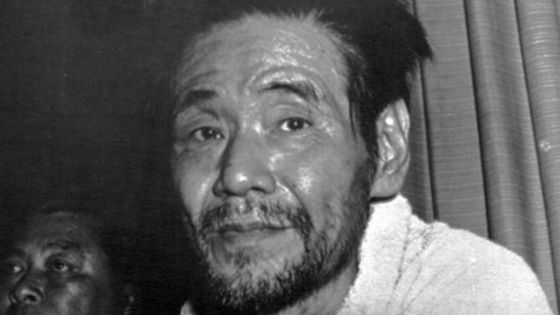
There was a period of time , back when we were working The Curtain, when there was a series of stories about how so-and-so had discovered another Japanese soldier on some out-of-the-way Pacific island who had been cut off and did not know the war was over.
Can you imagine...?
It'd be like living your whole life in the groove of a scratched record: the same musical phrase played over and over....
That's your whole world....
Operators--real operators, not those waiting for a call from their publishers--would be fine with it. You go in, you do your job and then you disappear; you don't wait around to be saluted, or to get a fucking sticker.
Do the thing, disappear.
Soldiers have to be relieved; soldiers have to stand at attention and march in a line. Operators can do neither unless they are playing a part, the part of a soldier.
I remember reading one of those stories about a Japanese soldier turning up on some island. At the time, I was stuck on another one of those Albanian taxis with only all the God-damned gear that everybody else was too good to be seen with. In the head I find this old copy of Look magazine that is being "re-purposed" one page at a time. I was just about to tear off a sheet of my own when I saw the eyes of the "rescued" soldier. The brought him back to the world, but you could see it in his eyes, the circuits were blown.
We'd met guys like that.
Out in the field, at that time, you would still run across the True Believers for whom the world stopped when the Chancellery fell, or the wall went up. There was nothing left to say, nothing new to learn. Everything either fit, or it did not; you were either in, or you were out. There was nothing left for them but disappointment.
You don't send a soldier to do an operator's job.
When it does happens that current events get out in front of an operation--happened all the time back in my day--you fade into the background, or you become part of the landscape.
After the Wall--those of us that were still around--we heard whispers about colleagues with second lives as loyal Party members. We also heard about those that couldn't and took the pill. When you're an operator, you find a way to operate; and when you can't, you disappear.
They took a break and re-set the room for some dice.
As good as the guy was with the cards--a real mechanic--he was a whole different level with the dice. Reminded me of watching Rollin get ready to take down a gambler.
The guy told us how he was never the shooter, he would just position himself on the rail and "help." He would pass the bones back up the table to the shooter and ring in the shavers and ring out the coolers.
This one thing was the whole thing: a simple, fluid, innocent-looking move that passed right under your nose. It passed.
When you knew what to look for, it still passed.
He did it with two different colors of dice and even after you saw the red dice go in and the white dice come out, I know there were still people in that room who would swear that he hadn't done a thing.
You gotta respect the skill.
The discipline that it took to get the touch and to run the tables on his terms right up until the last game had been played: that's a real operator.
He was taking a well-earned victory lap and talking about a period when he could make a living, a period that is now long-gone. He would show a move and tell a story about a time and a place and a person and some money and you could see he got a kick out of it: not from his face so much, but the eyes. They were lit a little differently when he was telling his war stories.
He said he was telling his stories for his grandchildren. He wanted them to know the man their parents had never met.
I understood that; that was a move I could see.
 They had a lot of questions.
Beginners always have a lot of questions. It's like they don't think they'll ever have another chance and so they want to make certain that nothing is overlooked.
"How were you recruited?"
It's such a loaded word. It makes it sound like there are scouts roaming the countryside looking for new talent.
They don't develop new talent for my line of work the same way you find linebackers or point guards. No one who does what I do--what I used to do--has ever had someone in a sweater vest sit down with their parents and talk about the future, or the value of service to country.
People who get into this line of work are not invited in; nobody holds back the velvet rope. You fall into this line of work.
Bad habits, bad choices, or both: those are at the core of a good operator's skill set. Everything else can either be beaten in, or out, of you.
I had one instructor once who boasted about his ability to teach anyone to jump out of a plane. Walking away from a parachute landing was above his pay grade.
"It's up to God, or Darwin," he would say.
Back in the day, before operators got book deals, there was always somebody waiting for a spot and so, if the chute didn't open, nobody really gave a shit.
That's the thing about huddled masses and wretched refuse: there's always more where that came from.
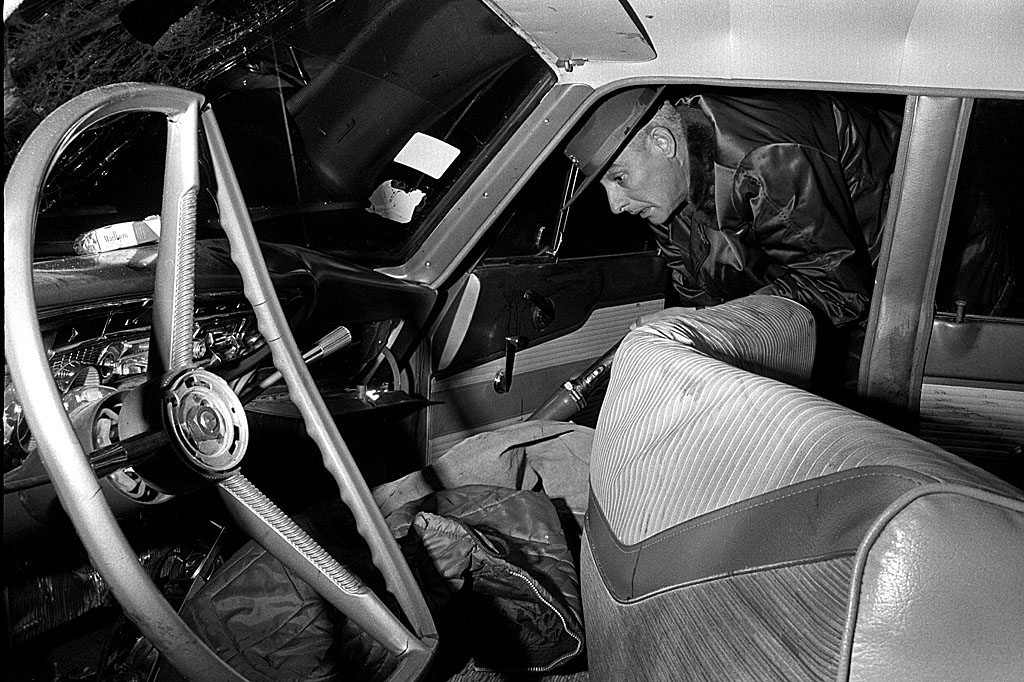
In my case, I took exception to some asshole that pulled out in front of me. Sonofabitch made me use my brakes, so I chased him down and "modified" his steering wheel.
Stupid fucking thing to do.... Just reached in through his window--I think it was open--and folded it in half, like a taco shell.
Shouldn't have cut me off.... He didn't know, I could have been crazy.
I still have no idea who flagged my file. It might have been somebody in the guy's insurance company.
Lots of operators with a background in insurance; turns out, we're all in good hands.
So, I'm minding my own business. I wasn't even all that worried about the court case. I focused on making money figuring that I'd be liable for expenses and court costs.
I took every job that I could and so didn't think that much about it when the phone rang.
"Mr. Armitage?"
"Yes?"
"I'd like to discuss an opportunity with you...."
"I'm listening," I said.
"Not over the phone; can we meet?"
I'd been through this before. I'm not sure whether it was that nobody believed the photos, or it was that they just wanted to see for themselves.
I had my share of lookey-loos. Some that wanted to do more than look, too.
None of it bothered me, so long as the cash was right.
I go to meet this guy and it was a whole different thing.
"Mr. Armitage?"
It was like being back in school; nobody ever called me that unless I was in trouble.
I was in trouble.
The guy on the other side of the uncomfortable table in the uncomfortable room looked like a lifer in an under-performing school district: a veteran of too many parent-teacher conferences and team-building exercises. He had the look of someone hoping their health held together long enough to make it to retirement.
"My name is Smith." They were always named Smith.
It was my first pitch meeting and I guess I was supposed to be impressed, or honored, or something.
He had a whole speech: they had been watching me; had taken an interest in my future; blah, blah, blah.
I wasn't really paying attention. It only mattered that his check cleared.
I entertained myself by trying to calculate how many more of these "bookings" I would have to take before I could pay of that guy for his steering wheel.
I was in the middle of carrying a four when there was a loud crash and my focus snapped to the table top and the taco shell-shaped steering wheel that had apparently just come in for a hard landing.
"Oh, I'm sorry, did I break your concentration?"
Mr. Smith suddenly looked very familiar, like that guy in that car.
"Like I said, we've been watching you for some time."
And they had because he proceeded to run through a list of my many faults, bad habits and questionable relationships.
"And?" I asked; I was very proud of my come-back.
"And I think we can help each other," he said.
I knew what that meant and it usually meant the better part of a bottle to flush that kind of "help" out of my system.
And a check-up.
"We can make this go away," he said as he put the People's exhibit on the floor behind him. "With our help, you can be a free, upstanding citizen once again."
"And?" I was killing it with my razor-sharp wit.
"Naturally, we would want a little something in return."
Here it comes....
"Look," I started to say, " I don't know what you think you know--."
"Relax," said Smith.
He slid a box across the table. It was smaller than a deck of cards. Maybe about the size of a pack of Wrigley's; it was the same color as the table and just as uncomfortable.
"What is it?" Not so clever now.
"A key," he said.
"To what?"
"Post Office box."
"Where?"
"Wherever you are; wherever you need to be."
"What's in it?" I asked.
"Depends: sometimes a piece of paper, maybe a photo, some money; whatever is required."
"'Required' for what?"
"For the work that we might ask you to do."
For a full minute, I looked at the key and considered the possibilities of what he was saying.
"It's a leash," I said.
"It's opportunity," he said after a long pause. "It's an opportunity to close one door and open another; an opportunity to use your...obvious talents in the service of your country."
Nobody had used that patter before, well, not since Korea and the way he said it it didn't sound nearly as noble.
"Listen Smith," I said. "You've obviously got your wires crossed somewhere. I was just a dumb grunt; a motor pool corporal and not a very good one. So, unless 'my country' is looking for me to lift weights and get drunk, I am not your guy."
"Don't sell yourself short, Willy"
My jaw clenched audibly.
"My name is not Willy," I hissed.
"I see," said Smith as he put down his pen and sat up a little straighter in his chair, his hands disappearing into his lap.
"We have all the tools we need," he continued. "What we lack, at the moment, are operators with the talent to use the right ones at the right time."
"I have no training for this type of work."
Smith seemed to relax somewhat.
"You have more than you realize, and what you don't know we can teach you."
"How long?"
"Things are in a highly fluid state just now. Let's just say ours will be an open-ended arrangement."
"Your grandfather give you that?"
"What?" For the first time, Smith seemed genuinely surprised.
"The steering wheel: is it some kind of an heirloom? All this bother, it suddenly seems very expensive."
"It came from an uncle," he said.